
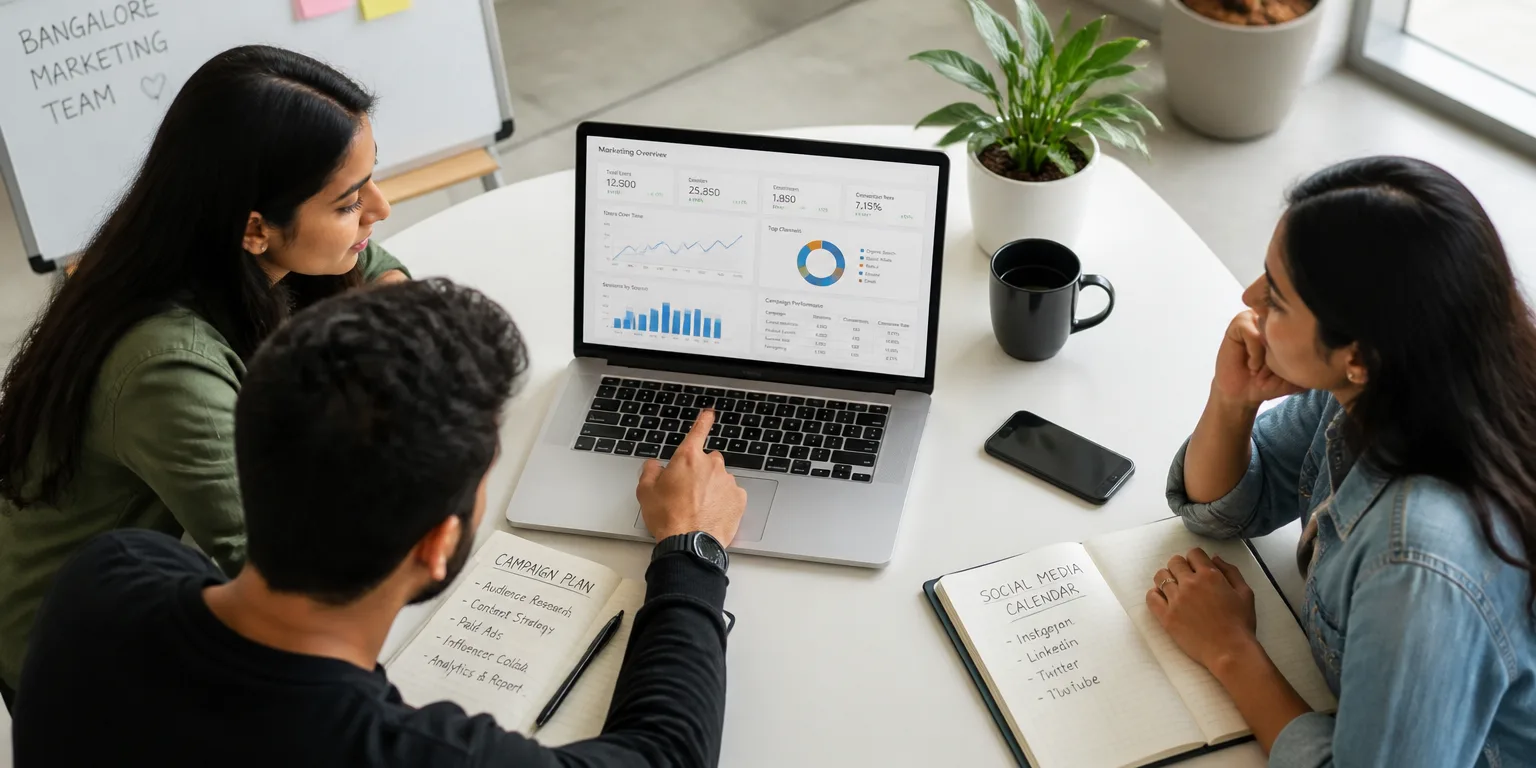
What's actually different about Bangalore in 2026?
Bangalore isn't Tier-2 India. It's the country's densest concentration of SaaS companies, deep-tech startups, and English-speaking professional buyers researching decisions on LinkedIn and Google before they ever pick up a phone. Trends written for a pan-India, vernacular-first audience don't translate cleanly here. What follows is ranked for that reality.
1. AI-led personalisation and campaign automation
Google's Performance Max, Meta's Advantage+, and LinkedIn's AI-optimised campaigns now handle bidding, placement, and creative combinations automatically. The brands winning aren't the ones fighting the automation they're the ones feeding it clean conversion data and clear inputs. For Bangalore's B2B and SaaS advertisers especially, the quality of your first-party conversion signals now matters more than manual bid tweaking ever did.
2. Generative Engine Optimization (GEO)
This is the trend most Bangalore agencies are still explaining badly. GEO is the discipline of structuring content so tools like ChatGPT, Perplexity, and Google AI Overviews retrieve, trust, and cite your brand when answering a question not just rank your page in a list of links. These systems work through retrieval: they break a query into sub-questions, pull a handful of sources, and weave a synthesised answer with citations. Getting into that handful means writing content that answers a question directly in the first few sentences, uses clear structure (defined terms, comparison tables, literal FAQ blocks), and builds genuine topical authority not keyword density. GEO doesn't replace SEO it depends on it. Most SMB marketing teams in Bangalore haven't started on this yet, which is exactly the opportunity
3. Voice and conversational search
Search queries are getting longer and more conversational "which digital marketing agency near me actually reports ROI" instead of "digital marketing agency Bangalore." Content built to answer full questions, not just match short keywords, wins both traditional snippets and AI citations.
4. Short-form video as the default content format
Reels and YouTube Shorts aren't a supplementary channel anymore for most consumer and even B2B brand-awareness plays, they're the primary one. The Bangalore advantage here is production access: the city has no shortage of affordable video talent, so the barrier is strategy and consistency, not budget.
5. Social commerce
Instagram and WhatsApp have become full storefronts, particularly for D2C and F&B brands. It removes a step between discovery and purchase no need to send traffic to a separate website first.
6. First-party data and privacy-first marketing
India's Digital Personal Data Protection Act is forcing a genuine reset in how brands collect and use data. Third-party cookie dependence is a liability now, not a convenience. Brands investing in owned channels email lists, WhatsApp groups, CRM-based retargeting are the ones insulated from the next platform or policy change.
7. Hyper-local and Google Business Profile optimisation
"Best service near me" and Maps-first discovery now decide a huge share of local buying decisions, even for B2B services with a physical Bangalore office. An outdated or thin Google Business Profile is now a genuine revenue leak, not a cosmetic issue.
8. Micro-influencer and community-led growth
Bangalore's dense startup and tech community means credible micro-influencers engineers, founders, niche creators often outperform large-follower influencers on trust and conversion, especially for B2B and SaaS products.
9. Purpose-led and transparent brand messaging
Bangalore's younger, more educated buyer base increasingly checks a brand's actual practices, not just its messaging. Vague sustainability or ethics claims without specifics now read as noise or worse, as a red flag.
10. Integrated, multi-channel measurement
Brands running three or more coordinated channels see meaningfully higher purchase rates than single-channel campaigns . The trend isn't a new channel it's finally connecting the ones you already run so spend decisions are based on full-funnel data, not platform-by-platform vanity metrics.
Which trend should you act on first?
| Trend | Effort to start | Impact for Bangalore SMBs | Best for |
| GEO / AI answer engines | Medium | High | B2B, SaaS, service brands |
| First-party data | Medium | High | Every brand |
| Google Business Profile | Low | High | Local/hybrid businesses |
| Short-form video | Medium | Medium-High | D2C, consumer brands |
| Social commerce | Low-Medium | Medium | D2C, F&B, retail |
| AI campaign automation | Low | Medium | Anyone running paid ads |
If you can only fund two of these in 2026, fix your Google Business Profile and first-party data collection first they're the cheapest to start and they make every other trend on this list work better.
Key takeaways
- Bangalore's buyer base is more B2B, SaaS, and English-first than the generic India trend lists assume localise your strategy accordingly, not just your language.
- GEO is now as important as traditional SEO. Structure content to directly answer questions in the first few sentences, or AI engines will cite a competitor instead.
- First-party data and Google Business Profile hygiene are the highest-impact, lowest-effort starting points for most Bangalore SMBs in 2026.
- Don't chase all ten trends at once prioritise by effort vs impact for your specific business model.
- Multi-channel, properly measured campaigns consistently outperform single-channel spend.